10 Best Car Charging Stations for Businesses
Choosing the right Car Charging Stations can turn a workplace parking lot into a practical service for employees, customers, and fleet drivers. The best option is not always the fastest charger or the one with the most impressive screen. It should suit how long vehicles stay, how many drivers need access, and what the site’s electrical capacity can support.
EV charging specialist Tom Moloughney has long discussed real-world charging experience. A useful principle drawn from that work is: “Reliable access matters as much as charging speed.” This is a paraphrase, not a verbatim quotation. It points to a detail businesses can overlook: a charger that is frequently unavailable creates frustration, even when its rated power looks impressive. Small details count. Clear signs, well-placed cables, and simple payment options can make a station easier to use.
This guide reviews 10 Best Car Charging Stations for Businesses, with attention to charging speed, installation needs, network features, and day-to-day usability. Some sites may need a few dependable Level 2 chargers; others may benefit from faster units and load management. There is no perfect setup for every parking lot. A careful choice starts with actual vehicle patterns, not optimistic forecasts. Check power requirements and service support before committing. That planning can feel tedious. It can also prevent costly surprises and help keep charging available when drivers need it.
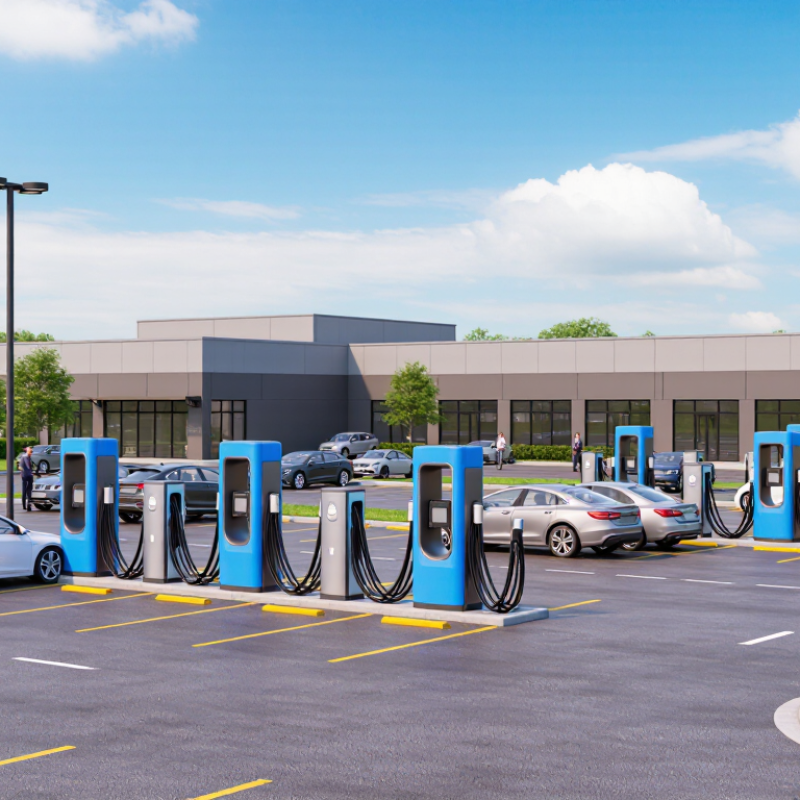
Understanding Commercial EV Charging Stations and Their Business Uses
Commercial EV charging stations serve more than parked vehicles. They can support employee commuting, customer visits, fleet shifts, and overnight parking. The right setup depends on dwell time: a retail customer may need a quick top-up, while an employee parked for eight hours can use slower Level 2 charging. The U.S. Department of Energy’s Alternative Fuels Data Center estimates Level 2 equipment typically adds about 10 to 20 miles of range per hour. That can make it practical for workplaces and hotels. IEA’s Global EV Outlook 2024 reported more than four million public charging points worldwide by the end of 2023, reflecting growing demand for accessible charging.
Tips: Track parking duration and daily vehicle counts before choosing charger quantities. Leave room for future electrical upgrades. A charger beside an empty lot is not automatically useful.
Businesses should also plan for payment access, signage, maintenance, and clear parking rules. For fleets, review vehicle routes and charging windows; several vehicles arriving together may create a peak-load problem. For customer-facing sites, visible chargers can improve convenience, but utilization may take time to build. That part is easy to underestimate. Pilot a small installation, record usage and downtime, then adjust placement or capacity. Data from actual site activity is more useful than assumptions about who might plug in.
10 Best Car Charging Stations for Businesses - Understanding Commercial EV Charging Stations and Their Business Uses
The options below describe commercial charging station configurations rather than branded products. Charging speed depends on the vehicle, site electrical capacity, charger power sharing, and local conditions. Connector standards and electrical requirements vary by region.
| # | Charging station configuration | Typical output | Typical parking time | Best business uses | Key planning considerations |
|---|---|---|---|---|---|
| 1 | Networked AC workplace charger | About 7–11 kW per port | Several hours | Offices, employee parking, and long-shift workplaces | Network features can support access control, usage reporting, and payment. Confirm electrical capacity and local connector standards. |
| 2 | Dual-port AC charger with power sharing | Commonly 2 × 7 kW, with output shared when needed | Several hours | Hotels, offices, and parking facilities seeking more charging points | Power sharing can serve more vehicles from a limited electrical supply; actual output per vehicle changes with simultaneous demand. |
| 3 | Higher-power AC charger | Up to about 19.2 kW in some North American installations; AC ratings vary by market | One to several hours | Fleet parking, vehicle rental sites, and locations with shorter stays | The vehicle’s onboard AC charger limits how much AC power it can accept. Check vehicle compatibility and site supply before specifying output. |
| 4 | Public destination AC charger | Typically about 7–22 kW, depending on the electrical system and region | One hour to overnight | Restaurants, attractions, hotels, and visitor destinations | Match power to typical visit length. Use clear parking rules to reduce vehicles occupying charging bays after charging. |
| 5 | Curbside or public-parking AC charger | Typically about 3.7–22 kW, depending on local supply and equipment | Several hours or overnight | Municipal parking, commercial districts, and properties without private parking | Consider accessible placement, weather protection, cable management, pedestrian clearance, and local permitting requirements. |
| 6 | Low-power DC charger | About 20–30 kW | Around one to several hours | Commercial fleets and sites where vehicles stay longer but need DC charging | DC charging bypasses the vehicle’s onboard AC charger, but the vehicle still limits the power it can accept. |
| 7 | 50 kW DC fast charger | About 50 kW | Typically a short stop to about an hour | Retail, service areas, and fleet operations with moderate turnaround needs | Charging time varies with battery size, starting charge level, temperature, and the vehicle’s charging curve. |
| 8 | 100–150 kW DC fast charger | About 100–150 kW per charging unit, subject to load sharing | Usually a short-to-moderate stop | Busy retail sites, travel corridors, and high-utilization fleets | Assess grid capacity, demand charges, transformer needs, and whether simultaneous charging reduces power available per vehicle. |
| 9 | High-power DC charger | About 150–350 kW, where supported by the charger and vehicle | Often suited to brief stops; actual time varies substantially | Highway locations and busy sites serving compatible vehicles | Not every EV can accept this power. Confirm connector compatibility, utility service, cooling requirements, and site economics. |
| 10 | Managed fleet-depot charging system | Multiple AC or DC ports; power is allocated according to fleet schedules and site limits | Overnight or between vehicle assignments | Delivery, service, municipal, and company vehicle fleets | Fleet management software can coordinate charging schedules. Base capacity planning on vehicle routes, departure times, and required energy. |
Related Posts
-

Top 10 Car Charging Station Manufacturers in China at the 137th Canton Fair
-

Understanding the Importance of Car Charging Stations in Modern Transportation
-

The Future of Electric Charging Stations Transforming Urban Landscapes and Driving Sustainability
-
2026 Best Home Charging Point Options for Electric Vehicles?
-
Global Market Insights 2025: Navigating the Future of EV Home Chargers for Savvy Buyers
-
How to Source the Best Commercial Ev Charger Suppliers for Your Business Success