Choosing the right Commercial Ev Charging Station supplier requires more than comparing charging speed and published prices. Fleet operators, property developers, and retail owners need equipment that performs reliably during daily traffic peaks. A busy depot may require thirty chargers before sunrise, while a shopping center may value compact design, payment integration, and simple maintenance. These operating differences shape every purchasing decision.
This guide examines China’s top ten commercial EV charging station suppliers through practical and technical criteria. The review considers charging output, connector compatibility, network software, safety features, warranty coverage, and after-sales support. It also evaluates manufacturing experience, testing procedures, international certifications, and communication standards such as OCPP. Real-world details matter. A charger that reaches its rated power in a factory test may behave differently in heat, dust, or unstable grid conditions.
No supplier is perfect. Rankings can also reflect incomplete public information. Some companies publish impressive specifications but provide limited evidence about long-term uptime. Others offer dependable hardware while presenting weaker software platforms. That difference deserves careful attention. Buyers should request installation references, service response times, spare-parts policies, and performance data from comparable projects.
The suppliers discussed here represent different strengths, including fast charging, scalable fleet systems, private-label manufacturing, and export support. However, this list should guide research rather than replace technical due diligence. A site survey, load assessment, and total-cost analysis remain essential before signing a contract. Good decisions take time. Mistakes can be expensive.
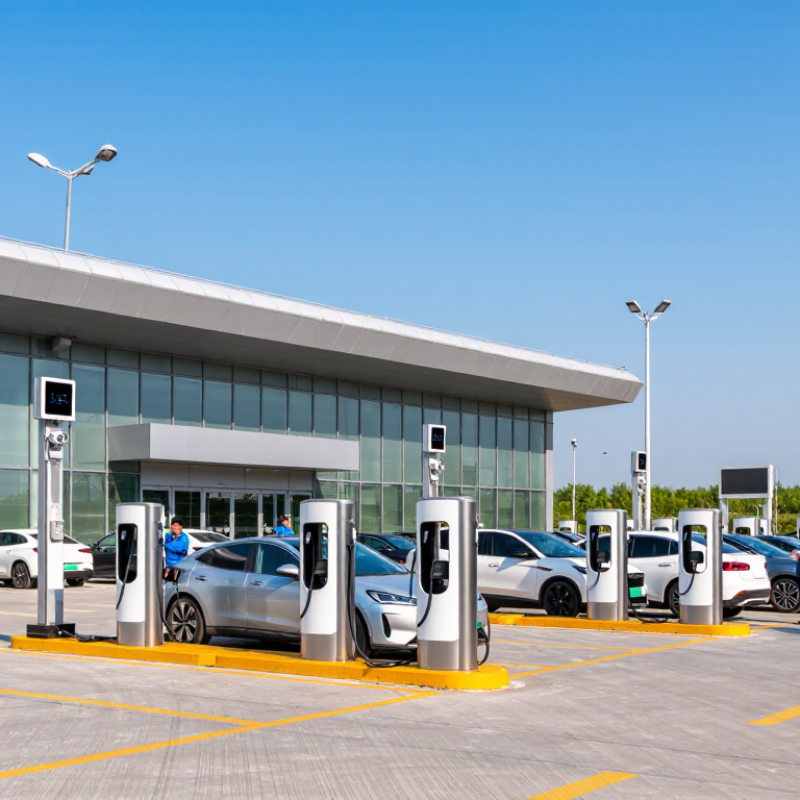
A commercial EV charging station supplier does more than sell charging hardware. It designs a workable system for real traffic, limited space, and changing power demand. A reliable supplier studies vehicle types, parking duration, grid capacity, and daily charging patterns before recommending equipment. A depot for electric buses needs a different solution from a shopping center car park.
Technical knowledge matters. Suppliers should explain output levels, connector compatibility, load management, payment systems, and remote monitoring in clear language. They should also provide installation guidance, testing procedures, warranty terms, and responsive maintenance.
One failed charger can create queues, upset drivers, and reduce site revenue. Uptime is not a slogan. It depends on spare parts, software support, trained technicians, and accurate fault reporting.
Tips: Ask for site references, service response times, and performance records. Check whether the supplier can support future expansion. Request a written estimate of installation, energy management, and maintenance costs. A low purchase price may hide expensive electrical upgrades. No supplier gets every site right. Even experienced teams can underestimate winter demand, cable wear, or local construction limits. That is why transparent assumptions matter. Choose a supplier willing to discuss weaknesses, not only equipment features.
China’s top ten commercial EV charging suppliers differ more by deployment capability than by headline power. This comparison treats the group as a practical market segment, not a fixed ranking. The China Electric Vehicle Charging Infrastructure Promotion Alliance reported rapid growth in public charging infrastructure through 2024. The International Energy Agency also found that China held more than half of the world’s public chargers in 2023.
Their product ranges cover compact 7–22 kW AC units, 60–240 kW DC chargers, and high-power systems above 480 kW. The strongest suppliers support fleet depots, highway sites, shopping centers, and urban parking facilities. Several provide liquid-cooled cables, modular power cabinets, dynamic load balancing, and remote fault diagnosis. These details matter when a depot serves buses before dawn. Power alone does not guarantee useful uptime.
Software separates the group further. Mature suppliers offer OCPP compatibility, tariff control, digital payment, energy monitoring, and integration with fleet-management platforms. Some support vehicle-to-grid functions, but real-world availability remains uneven. The IEA notes that charging demand is rising alongside electric vehicle ownership, increasing pressure on grid planning and site reliability. Service networks, spare-part response, and commissioning experience therefore deserve equal weight. A lower-priced charger may become expensive after repeated failures. Procurement teams should request measured uptime records, not polished claims. Even published performance data can be incomplete.
China’s top ten commercial EV charging station suppliers vary in engineering depth, production scale, and after-sales support. A useful comparison should examine more than unit price. Experienced buyers check output stability, connector options, enclosure strength, and software compatibility. A reliable supplier shares test records, installation drawings, and clear warranty terms. Site experience matters too. A charger beside a busy warehouse faces dust, heat, rain, and repeated cable handling. Laboratory claims may not reflect that reality.
The leading ten suppliers are best understood by capability. Some focus on high-power DC stations for fleets and highway depots. Others build compact AC units for offices, hotels, and apartment parking. Several combine chargers with load management, payment control, remote diagnostics, and energy monitoring. Strong manufacturers explain cooling design, protection functions, and maintenance intervals clearly. They also provide regional service teams and spare-part plans. Ask for references from similar sites. One impressive showroom is not enough.
A careful evaluation should include uncomfortable questions. Can the supplier meet delivery schedules during component shortages? How quickly can it replace a failed power module? Does its dashboard export usable operating data? A pilot installation is often wiser than a large first order. Measure uptime, charging speed, fault recovery, and user feedback for several weeks. Even well-designed equipment may need firmware adjustments. That is not automatically a failure, but vague responses are a warning. The cheapest station may become expensive when downtime interrupts fleet routes.
China’s top commercial EV charging suppliers should be judged by technology, standards, and network performance. The IEA’s Global EV Outlook 2024 reported nearly four million public chargers worldwide in 2023. China held more than half of them. Scale matters, but reliability matters more.
A strong supplier supports high-power DC charging, dynamic load balancing, and remote fault diagnosis. OCPP compatibility can connect chargers with different software platforms. ISO 15118 enables secure vehicle communication, smart charging, and possible plug-and-charge functions. Regional standards also require attention. GB/T is essential in China, while CCS and CHAdeMO remain important for international projects. The IEC 61851 framework helps define charging control and safety requirements. These details are not decoration. A damaged connector or unstable payment session can stop a fleet for hours.
Tips: Ask for measured uptime, not promotional uptime. Request three years of failure data. Confirm whether the network supports roaming, offline payment, and open APIs. The U.S. National Renewable Energy Laboratory notes that charger utilization strongly affects project economics, yet utilization forecasts are often optimistic. That is a useful warning. A depot may need fewer chargers, but higher availability. A highway site may need more power, cooling, and maintenance coverage. IEA data also shows rapid charger deployment, but growth does not guarantee uniform service quality. Suppliers should disclose testing methods, response times, and replacement procedures. Some specifications still look impressive on paper. Field conditions are less polite.
An anonymized comparison of common commercial charging-supplier capability profiles in China. Power ranges and standards represent established industry specifications rather than company-specific product claims.
| Rank | Supplier Capability Profile | Typical Output | Primary Commercial Use | Connector and Charging Mode | Major Standards and Protocols | Key Technologies | Network Features | Commercial Strength |
|---|---|---|---|---|---|---|---|---|
| 1 | High-Power Public DC Profile | 120–480 kW DC per dispenser | Expressway hubs, urban fast-charging centers, fleet depots | GB/T DC; single- or dual-vehicle charging; conductive charging | China GB/T 20234 series; GB/T 18487.1; IEC 61851 principles; OCPP support may be available | Modular power cabinets, dynamic power allocation, liquid-cooled cables on selected high-power systems | Remote monitoring, charger status, alarms, transaction records, load management | Fast turnaround and high charger utilization for busy public sites |
| 2 | Integrated Charging-Hub Profile | 60–240 kW DC per charging point | Shopping centers, transport hubs, hotels, office parks | GB/T DC and AC options; conductive charging | GB/T 20234; GB/T 18487.1; electrical safety and EMC requirements under applicable Chinese regulations | Compact integrated cabinets, touch displays, RFID or QR-code authentication, payment integration | Cloud management, user authorization, pricing rules, online fault alerts, usage reports | Balanced installation cost, user convenience, and site-management capability |
| 3 | Bus and Heavy-Duty Fleet Profile | 120–600 kW DC per vehicle connection | City-bus depots, logistics yards, sanitation fleets, heavy-duty vehicles | GB/T DC; pantograph systems may be used for selected bus operations | GB/T 20234; GB/T 18487.1; fleet energy-management interfaces; site electrical standards | Scheduled charging, high-current DC output, depot load balancing, optional overhead pantograph charging | Fleet identification, dispatch integration, charging reservations, energy and vehicle reports | Supports predictable fleet schedules and high daily energy throughput |
| 4 | Commercial AC Destination Profile | 7–22 kW AC per charging point | Workplaces, residential-commercial buildings, hotels, parking facilities | GB/T AC; Mode 3 conductive charging | GB/T 20234.2; GB/T 18487.1; IEC 61851-1 principles; local low-voltage installation rules | Smart load balancing, residual-current protection, scheduled charging, energy metering | App or QR-code access, reservations, billing, charging history, remote configuration | Lower infrastructure demand and suitable for long dwell times |
| 5 | Modular Split-Architecture Profile | 120–360 kW DC shared across multiple terminals | Large parking lots, fleet campuses, multi-bay charging stations | GB/T DC; multiple dispensers connected to centralized power cabinets | GB/T 20234; GB/T 18487.1; electrical protection, EMC, and communication requirements applicable to the installation | Power sharing, cabinet expansion, N+1 module design, simplified dispenser maintenance | Centralized diagnostics, connector-level metering, remote firmware management, utilization analytics | Efficient power distribution and flexible expansion as demand increases |
| 6 | Renewable-Energy Integrated Profile | 60–240 kW DC with AC charging options | Solar-equipped commercial sites, industrial parks, green logistics facilities | GB/T AC and DC; stationary conductive charging | GB/T 20234; GB/T 18487.1; photovoltaic, energy-storage, and grid-interconnection requirements as applicable | Solar forecasting, battery energy storage, peak shaving, energy-management-system integration | Generation and consumption monitoring, energy dashboards, demand control, carbon reporting | Can reduce peak demand and improve renewable-energy utilization |
| 7 | Battery-Swapping and Charging Ecosystem Profile | Station-dependent; commonly 100–500 kW connected load | High-utilization fleets, taxis, delivery vehicles, selected commercial vehicle segments | Automated battery exchange plus conductive charging for battery inventory | Applicable Chinese battery-swapping, vehicle, electrical-safety, communication, and data requirements; specifications vary by vehicle ecosystem | Robotic or guided battery exchange, battery identification, state-of-health monitoring, thermal management | Battery inventory tracking, reservation, asset management, remote station diagnostics | Minimizes vehicle waiting time where compatible standardized batteries are available |
| 8 | Ultra-Fast Liquid-Cooled Profile | 250–600 kW DC for compatible vehicles and sites | Premium highway service areas, high-volume urban charging plazas | GB/T DC with liquid-cooled cable assemblies on selected systems | GB/T 20234; GB/T 18487.1; applicable high-power electrical, thermal, EMC, and safety requirements | Liquid-cooled cables, high-current connectors, dynamic power distribution, thermal monitoring | Real-time temperature alarms, session monitoring, remote diagnostics, power-demand management | Short charging sessions, subject to vehicle acceptance rate, battery limits, and grid capacity |
| 9 | Smart-Grid and Demand-Response Profile | 7–240 kW per point, depending on AC or DC architecture | Commercial buildings, utility-linked charging parks, managed fleet sites | GB/T AC or DC; conductive charging with controllable power | GB/T 20234; GB/T 18487.1; utility demand-response and energy-management interfaces where supported | Dynamic load control, time-of-use charging, power-factor management, controlled charging schedules | Open APIs or platform interfaces, tariff configuration, demand monitoring, remote power limits | Helps control operating costs and reduce local grid peak pressure |
| 10 | Interoperable Network-Operations Profile | 7–240 kW AC/DC portfolio range | Multi-site operators, public charging networks, property-management portfolios | GB/T AC and DC; mixed charger fleets connected to a central platform | GB/T 20234; GB/T 18487.1; OCPP may be used for platform interoperability; API capability depends on system design | Cloud-native management, device authentication, remote firmware updates, cybersecurity controls | Multi-site dashboards, roaming or platform integration, online payment, service tickets, KPI analytics | Suitable for standardized operation across geographically distributed charging assets |
Choosing among China’s top commercial EV charging suppliers requires more than comparing catalogue prices. Start with your site’s daily traffic, vehicle types, parking duration, and available electrical capacity. A depot serving buses needs different equipment from a hotel or retail car park.
Ask for measured performance, not attractive promises. Review output stability, charging efficiency, connector durability, and uptime records from comparable projects. Request references you can contact. Check whether the system supports open communication protocols, remote diagnostics, load balancing, and software integration. These details affect operations every day.
Installation planning is equally important. Confirm cable length, enclosure protection, ventilation, civil works, and grid approval responsibilities. A low purchase price can become expensive after trenching, transformer upgrades, and maintenance visits. Study the warranty carefully. It should define response times, spare-parts availability, and replacement procedures.
Test the system before scaling. A small pilot can expose payment failures, weak mobile coverage, or confusing user instructions. It may feel slower, but it protects the larger investment. I have seen buyers focus too heavily on charging speed and overlook queue management. That is a costly mistake.
Evaluate the supplier’s engineering team, training, documentation, and local service capability. Ask how faults are escalated at night. Also examine cybersecurity controls and data ownership. Specifications can change during negotiation, so record every promise in the contract. No supplier is perfect. A transparent response to limitations is often more reliable than polished sales language.