What Is a Commercial EV Charging Station?
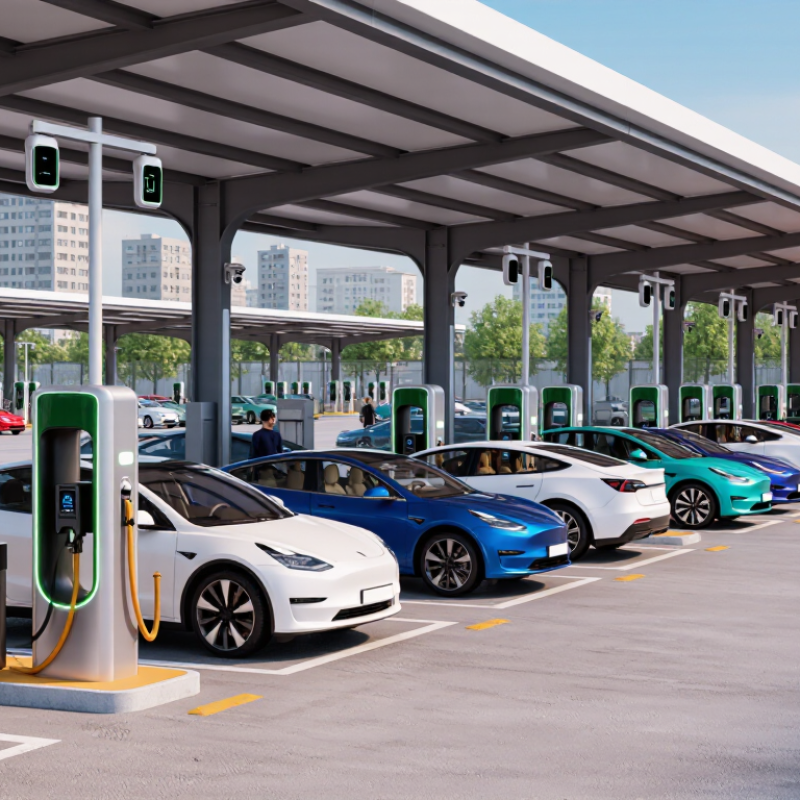
What Is a Commercial Ev Charging Station? It is charging infrastructure designed for businesses, workplaces, retail sites, fleets, hotels, and other commercial properties. Unlike a private home charger, it may serve many drivers each day. It usually includes network software, payment processing, energy monitoring, safety controls, and scheduled maintenance. A busy site can feel practical and immediate: several vehicles arrive, cables connect, and charging data appears on a cloud dashboard.
The International Energy Agency reported in its Global EV Outlook 2024 that more than 14 million electric cars were sold worldwide in 2023. The report also estimated over four million public charging points globally by the end of that year. These figures show why commercial charging is becoming an operational requirement, not merely an environmental feature. However, deployment numbers can hide important differences. A reliable Commercial Ev Charging Station must provide suitable power, clear pricing, accessible parking, and dependable uptime. The U.S. Department of Energy’s Alternative Fuels Data Center also emphasizes that charging needs vary by vehicle type, location, and use pattern.
There is no universal installation formula. A delivery fleet may require overnight depot charging, while a shopping center may need faster daytime service. Electricity demand charges, local grid capacity, permitting, and maintenance costs can change the business case sharply. A charger can be technically impressive but commercially disappointing. That reality deserves honest review. Industry reports provide useful direction, yet site-specific traffic, vehicle dwell time, and energy tariffs still determine performance. This guide explains the equipment, operating models, costs, and planning decisions behind commercial EV charging.
What Defines a Commercial EV Charging Station?
What Is a Commercial EV Charging Station?
What Defines a Commercial EV Charging Station?
A commercial EV charging station is built for business use, not simply home charging. It may serve drivers at offices, retail sites, hotels, fleets, or public parking facilities. The defining feature is organized access: multiple users, managed payments, service monitoring, and dependable availability. The boundary is not perfectly clean. A workplace charger can be private, while a fleet charger can support several businesses.
Hardware also matters. Level 2 equipment commonly supplies 208 or 240 volts, while DC fast charging delivers higher power for shorter stops, according to the U.S. Department of Energy’s Alternative Fuels Data Center. Site operators must plan cable length, parking layout, accessibility, drainage, lighting, and electrical capacity. A charger beside a busy entrance may be technically excellent but operationally frustrating.
Reliability is the harder test. The International Energy Agency reported more than four million public charging points worldwide by the end of 2023, after strong annual growth. That scale raises expectations for uptime, payment clarity, and repair response. Commercial systems often use software to track sessions, manage power, and produce usage reports. Yet software cannot fix an undersized transformer or poor signage. Real-world performance depends on installation quality, maintenance, and local traffic patterns. A checklist helps, but it can still miss the driver waiting in rain with a blocked cable.
What Is a Commercial EV Charging Station? - What Defines a Commercial EV Charging Station?
| Definition Dimension | Typical Commercial Characteristics | What It Means in Practice | Why It Matters |
|---|---|---|---|
| Primary Purpose | Provides electric vehicle charging for customers, employees, tenants, fleet operators, or the general public. | It is installed as part of a business, workplace, property, fleet, or public mobility operation rather than solely for private household use. | Commercial systems are designed around shared access, operational continuity, and measurable energy use. |
| Common Locations | Retail centers, offices, hotels, apartments, hospitals, airports, parking facilities, service stations, and fleet depots. | The charging equipment is positioned where vehicles are parked for work, shopping, travel, accommodation, or scheduled operations. | Location influences charger power, parking duration, electrical design, user access, and payment requirements. |
| Charging Output | May include AC charging from approximately 3.7 kW to 22 kW and DC fast charging from approximately 24 kW to more than 350 kW. | Lower-power AC charging generally supports longer dwell times, while higher-power DC charging is intended for shorter stops or intensive fleet use. | The appropriate output depends on vehicle capability, parking duration, available electrical capacity, and expected demand. |
| Charging Current | Uses either alternating current (AC) supplied to the vehicle’s onboard charger or direct current (DC) delivered through external charging equipment. | AC equipment normally relies on the vehicle to convert AC to DC. DC equipment performs the conversion within the charging system. | The charging method affects equipment cost, installation requirements, charging speed, and site power demand. |
| Electrical Supply | Can use single-phase or three-phase AC service for AC charging, while high-power DC systems typically require substantial three-phase supply. | The site may require a dedicated circuit, upgraded switchgear, distribution equipment, protection devices, or utility coordination. | Electrical capacity is a major factor in determining how many chargers can operate simultaneously. |
| Number of Charging Ports | May range from one shared port to multiple independently managed ports across a parking area or depot. | A commercial installation can support several vehicles at once and may allocate power dynamically between active charging sessions. | Port quantity should reflect parking availability, vehicle turnover, peak demand, and future expansion plans. |
| Access Control | Can be open to the public, restricted to employees or residents, or reserved for a private fleet. | Access may be managed through payment terminals, mobile applications, RFID credentials, digital accounts, or vehicle and user permissions. | Access rules help operators control site use, support different user groups, and manage charging privileges. |
| Payment and Pricing | May support pricing by energy delivered, charging time, session, parking duration, subscription, or a combination of these methods where permitted. | The operator can establish different rates for public users, employees, residents, fleet vehicles, or selected time periods. | A clear pricing structure supports cost recovery and helps manage charger availability. |
| Network Connectivity | Often includes cellular, Ethernet, Wi-Fi, or other communication links for remote monitoring and management. | Connected equipment can report status, record sessions, apply access rules, receive software updates, and transmit operational data. | Connectivity improves visibility, troubleshooting, billing administration, and utilization analysis. |
| Load Management | May use scheduled charging, power sharing, demand controls, or dynamic load balancing. | The system can distribute available power among vehicles instead of allowing every connected charger to draw maximum output simultaneously. | Load management can reduce peak demand and help prevent the site from exceeding electrical limits. |
| Safety and Protection | Includes electrical protection, grounding, overcurrent protection, insulation monitoring where applicable, emergency stopping, and protection from environmental exposure. | Equipment and installation must comply with applicable electrical, construction, accessibility, and fire-safety requirements. | Proper protection reduces electrical hazards and supports safe operation for users, vehicles, and facility personnel. |
| Installation Format | Can be wall-mounted, pedestal-mounted, or integrated into dedicated charging cabinets and parking infrastructure. | The physical layout must account for cable reach, vehicle movement, parking dimensions, accessibility, drainage, lighting, and protection from impact. | A suitable layout improves usability and reduces installation, maintenance, and traffic-management problems. |
| Environmental Rating | Outdoor commercial equipment is commonly designed with weather-resistant enclosures and protection against dust and water ingress. | Outdoor installations require equipment suitable for local temperature, moisture, sunlight, snow, salt, and other site conditions. | Environmental suitability helps maintain reliability and extends equipment service life. |
| Operational Availability | Commercial sites generally monitor charger availability, faults, session completion, and maintenance status. | Operators may use remote alerts, service procedures, spare parts, and on-site inspections to restore unavailable equipment. | High availability is important because users and fleet operations depend on predictable access to charging. |
| Data and Reporting | Systems can record energy consumption, session duration, port utilization, revenue, faults, and user activity. | Managers can review charging behavior, identify peak periods, compare locations, and plan additional capacity. | Accurate operational data supports budgeting, energy management, maintenance planning, and sustainability reporting. |
| Interoperability | Commercial systems may support recognized communication and connector standards, depending on the region and vehicle population. | Interoperability allows charging equipment, management software, payment systems, and electric vehicles to exchange required information. | Broader compatibility can reduce user restrictions and simplify future system expansion. |
| Business Model | May operate as an employee benefit, tenant amenity, public charging service, fleet infrastructure, parking service, or energy-management asset. | The owner may charge users, absorb electricity costs, share revenue, or use charging to support another commercial service. | The business model determines equipment selection, pricing, access policies, and return-on-investment expectations. |
| Scalability | Often planned with spare electrical capacity, modular equipment, additional conduit, or reserved parking spaces for future chargers. | The initial installation can be expanded as electric vehicle adoption and charging demand increase. | Planning for growth can reduce the cost and disruption of later upgrades. |
| Key Distinction from Home Charging | Commercial charging is shared, managed, and connected to an organizational or revenue-generating operation. | It typically requires stronger access management, usage tracking, service support, electrical planning, and compliance oversight than a private residential charger. | These operational requirements are what define a commercial EV charging station beyond charger power alone. |
Related Posts
-
China Top 10 Commercial EV Charging Station Suppliers?
-
Insights into the Best Ev Charger Innovations Shaping the Future of Sustainable Transportation
-

How to Successfully Install an Electric Car Charger at Home
-
Best Home EV Charging Stations for Your Electric Vehicle Ready?
-
全球电动车充电器安装费用的隐秘真相与顶尖技术
-
How to Source the Best Commercial Ev Charger Suppliers for Your Business Success